
Marble Run Ideas: 15 DIY Designs to Build at Home (Plus How to Make Them Faster)
By the Tressiv Games team · Ideas · Updated
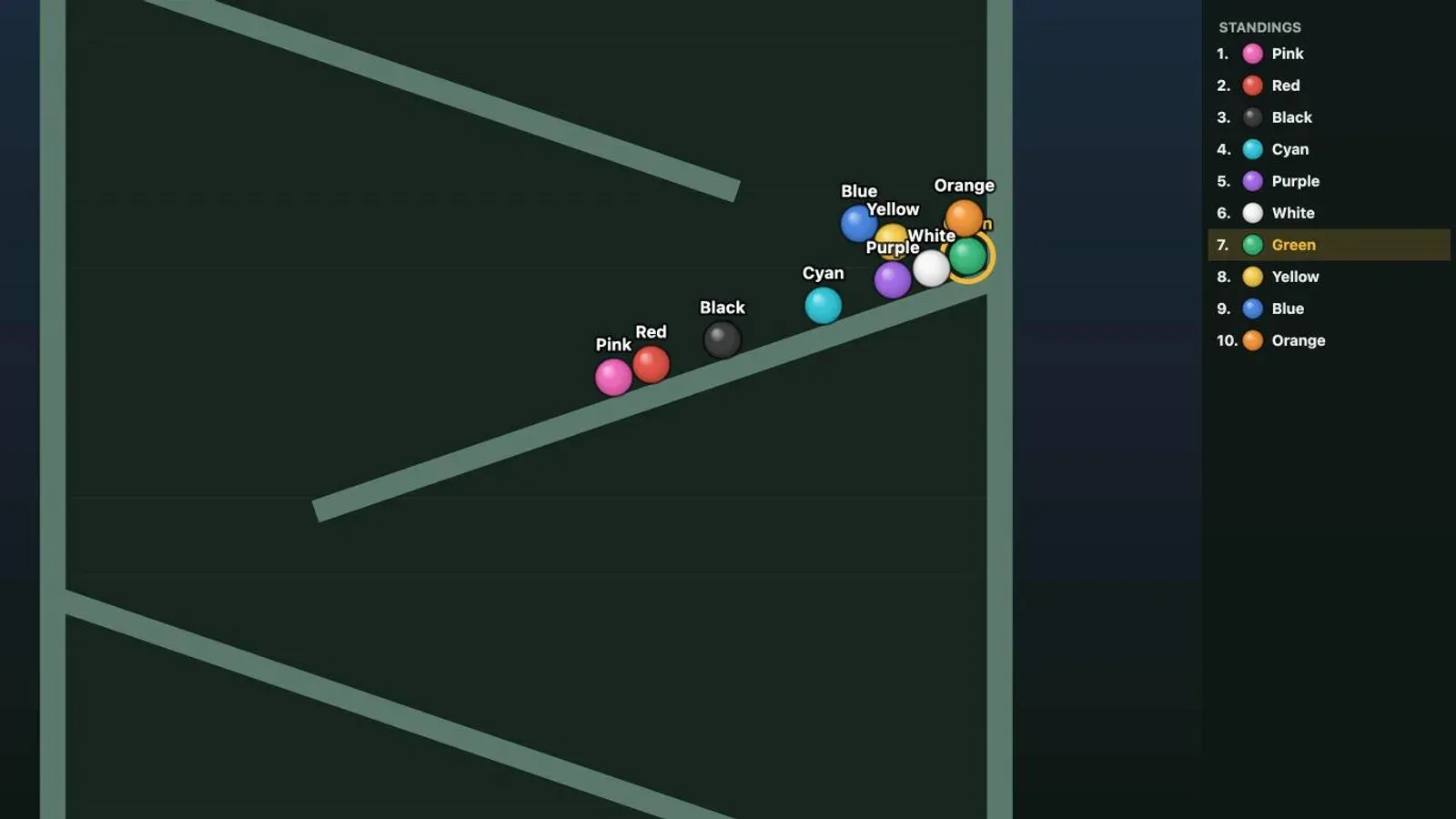
What you need to build a marble run
- Marbles — standard 16 mm glass marbles work for most builds.
- Track pieces — paper towel and toilet roll tubes cut in half lengthways, cardboard strips, pool noodles cut in half, LEGO bricks or wooden strips.
- A frame — a wall (with painter's tape), a large cardboard box, a pegboard or a fridge door with magnets.
- Tape and scissors, plus a cup or bowl to catch marbles at the end.
15 marble run ideas
- 1. Wall zigzag — tape half-tubes to a wall in a zigzag, each one sloping the other way. The classic first build.
- 2. Cardboard box tower — cut ramps from the sides of a tall box and fold them inward so marbles drop from ramp to ramp.
- 3. Pool noodle racetrack — cut a pool noodle in half lengthways for two lanes and race marbles side by side down the stairs.
- 4. Peg board — push pins or golf tees into foam board in offset rows; marbles bounce down at random like a plinko board.
- 5. Funnel finish — a paper cone or a cut plastic bottle that spins marbles around before dropping them into a cup.
- 6. Spiral tower — wrap a strip of card around a tall tube to make a helter-skelter.
- 7. Drop and catch — a gap the marble jumps across into a wider tube. Test the gap by moving it a little at a time.
- 8. LEGO run — build channels with bricks on a baseplate; tilt the baseplate or stack levels.
- 9. Magnetic fridge run — glue magnets to tube pieces so the track can be rearranged on the fridge.
- 10. Elimination race — a track that splits so some marbles fall out each round; the last marble left wins.
- 11. Seesaw switch — a balanced flap that tips each time a marble lands, sending the next one the other way.
- 12. Loop-the-loop — clear plastic tubing can carry a fast marble around a loop; start it from high up.
- 13. Bell finish — hang a small bell or a cup of jingly items where marbles land for a satisfying sound.
- 14. Domino trigger — the marble knocks over dominoes at the end of the run.
- 15. Country race — stick small flag stickers on clear marbles and race nations, like an online country marble race.
Marble run physics: slopes, turns and drops
Slope: too shallow and marbles stop; too steep and they fly off the turns. Most runs work best between about 5 and 15 degrees. If a marble stalls, raise the start of that piece slightly.
Turns: at each change of direction the marble hits the wall and loses speed. Add a slightly steeper ramp after each turn so it picks the speed back up.
Drops: a vertical drop adds a lot of speed. Use drops to rescue a slow section, and add a wall or cup to catch the marble so it doesn't bounce out.
Friction: paper and cardboard slow marbles down more than plastic or smooth wood. Long cardboard runs need a little more slope.
How to make a marble race fair
- Use identical marbles — the same size and the same material.
- Start them from a gate: a strip of card held across the start and pulled away in one motion.
- Swap lanes between heats so no marble always gets the fast lane.
- Race best of three or five — single races are often decided by one lucky bounce.
Try a marble race online
Building takes time, and every rebuild is one track. Our free Marble Race builds a new random track every race — zigzag ramps, peg fields and spinning paddles — and races up to 24 colours, countries or your own names. Every marble is identical and the start is shuffled, so it is a fair way to pick a winner. Read how marble races work for the physics behind it.
Frequently asked questions
What is the best material for a DIY marble run?
Paper towel tubes cut in half are the easiest and cheapest. Pool noodles make great racing lanes, and LEGO or wood are best for runs you want to keep.
Why does my marble keep getting stuck?
Usually the slope is too shallow or a joint between two pieces has a lip. Raise the start of the slow piece a little and make sure each piece overlaps the next on top, like roof tiles.
How steep should a marble run be?
Around 5 to 15 degrees works for most tracks. Make it steeper after sharp turns, where marbles lose speed.
Can you play a marble race online?
Yes. Marble Race on Tressiv Games is free in your browser: choose colours, countries or your own names and watch them race down a new random track.
Play free on Tressiv Games
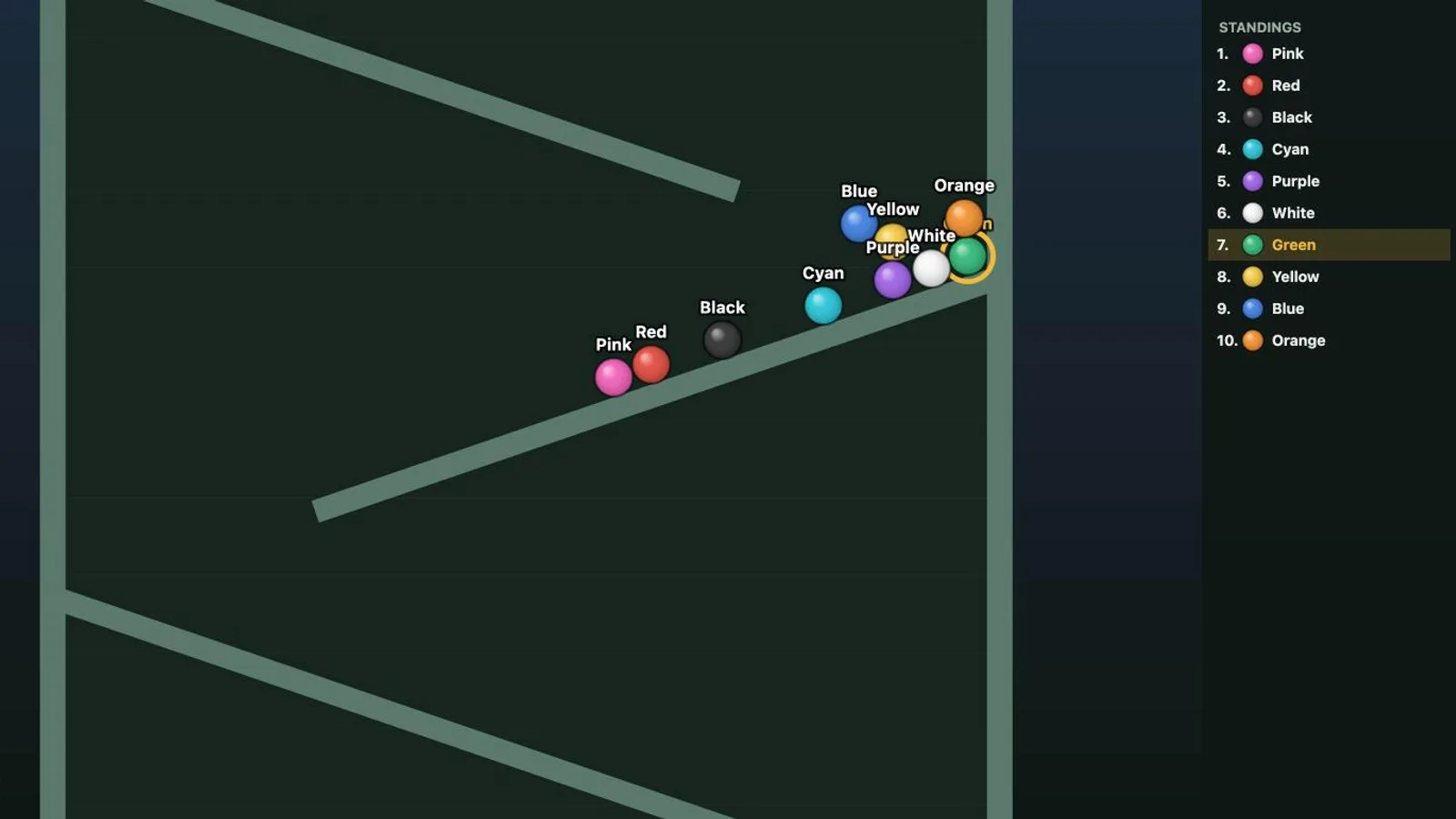 Marble race simulatorPlay now
Marble Race
Race colours, countries or your own names down a new random marble track.
 Physics puzzlePlay now
Bridge Snap
Build a bridge, send the traffic over, and watch it hold — or snap.